How to Recover Lost Government Scheme Benefits
Government schemes are designed to support citizens by providing financial assistance, subsidies, insurance, pensions, and other welfare services. However, many individuals lose access to these benefits due to lack of awareness, documentation issues, technical errors, or administrative delays. If you believe you’ve missed out on a government scheme or your benefits have stopped, the good news is that in many cases, they can be recovered.
This guide explains in detail how to identify lost benefits, the reasons behind them, and the step-by-step process to recover what you are entitled to.
Understanding Government Scheme Benefits
Government benefits in India are delivered through various schemes launched by both central and state governments. These include:
- Direct Benefit Transfer (DBT) schemes
- Subsidies (LPG, fertilizers, etc.)
- Pension schemes (old age, widow, disability)
- Scholarship programs
- Health insurance schemes like Ayushman Bharat
- Employment programs such as MGNREGA
These benefits are usually transferred directly to bank accounts or provided through services. Losing access to these benefits can affect financial stability, especially for economically weaker sections.
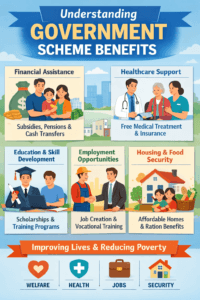
Common Reasons Why Benefits Are Lost
Before trying to recover benefits, it’s important to understand why they were lost in the first place.
1. Aadhaar Not Linked Properly
Most government schemes require Aadhaar linkage with bank accounts. If Aadhaar is not linked or updated, benefits may stop.
2. Bank Account Issues
Inactive or closed bank accounts can lead to failed transfers. Sometimes, accounts are frozen due to KYC issues.
3. Incomplete or Incorrect Documentation
Errors in name, address, or identity proof can cause disqualification or delays.
4. Eligibility Changes
If your income level, age, or employment status changes, you may no longer qualify for certain schemes.
5. Technical Errors in DBT System
Sometimes, payments fail due to server issues, mismatched data, or system glitches.
6. Duplicate or Multiple Registrations
If multiple entries exist under your name, the system may reject or pause your benefits.
7. Lack of Awareness
Many people don’t realize they are eligible or that they need to renew or update their details periodically.
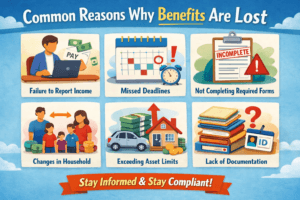
Step-by-Step Process to Recover Lost Benefits
Recovering lost government scheme benefits requires patience and proper documentation. Here is a structured approach:
Step 1: Identify the Scheme
Start by clearly identifying which scheme you were enrolled in or eligible for.
- Check old records, SMS alerts, or bank statements
- Visit official government portals
- Ask local authorities (Gram Panchayat, Municipal Office)
Make sure you know:
- Scheme name
- Enrollment ID (if available)
- Department handling the scheme
Step 2: Verify Your Eligibility
Before proceeding, confirm whether you still meet the eligibility criteria.
- Income limits
- Age requirements
- Category (SC/ST/OBC/EWS)
- Employment status
You can verify eligibility on official websites or by consulting local officials.
Step 3: Check Aadhaar and Bank Linkage
Since most schemes use DBT:
- Ensure Aadhaar is linked to your bank account
- Verify your bank account is active
- Complete KYC if pending
You can check Aadhaar-bank linkage through:
- UIDAI website
- Your bank branch
- ATM or mobile banking apps
Step 4: Track Payment Status
Many schemes provide online tracking tools.
- Visit the scheme’s official portal
- Enter your Aadhaar number or application ID
- Check payment status
Look for:
- Failed transactions
- Pending approvals
- Rejected applications
Step 5: Update or Correct Your Details
If there are errors:
- Correct your name, address, or bank details
- Update Aadhaar information if needed
- Re-submit documents
This can usually be done:
- Online via official portals
- At Common Service Centers (CSCs)
- At government offices
Step 6: File a Complaint or Grievance
If your issue is not resolved:
- Use government grievance portals such as:
- CPGRAMS (Centralized Public Grievance Redress and Monitoring System)
- State grievance portals
Provide:
- Scheme details
- Proof of eligibility
- Screenshots or documents showing the issue
Step 7: Visit Local Authorities
Sometimes, online complaints are not enough.
Visit:
- Gram Panchayat office
- Block Development Office (BDO)
- District Welfare Office
Carry:
- Aadhaar card
- Bank passbook
- Application receipts
- Relevant documents
Local officials can escalate your issue or correct records.
Step 8: Reapply if Necessary
If your application was rejected or expired:
- Submit a fresh application
- Ensure all documents are correct and updated
In some cases, benefits may be restarted after reapplication.
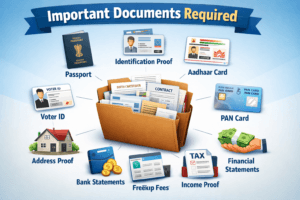
Important Documents Required
Keep the following documents ready:
- Aadhaar Card
- PAN Card (if required)
- Bank passbook
- Income certificate
- Caste certificate (if applicable)
- Residence proof
- Passport-size photographs
Having proper documentation speeds up the recovery process.
Tips to Avoid Losing Benefits Again
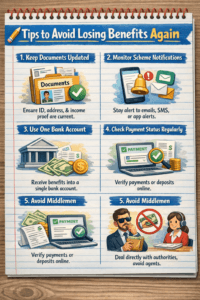
Recovering benefits can be time-consuming, so prevention is key.
1. Keep Documents Updated
Regularly update your Aadhaar, bank details, and KYC.
2. Monitor Scheme Notifications
Stay informed about renewal deadlines and policy changes.
3. Use One Bank Account
Avoid multiple accounts for DBT schemes to reduce confusion.
4. Check Payment Status Regularly
Log in to portals and track your benefits.
5. Avoid Middlemen
Apply directly through official portals or CSCs.
Role of Digital Platforms in Recovery
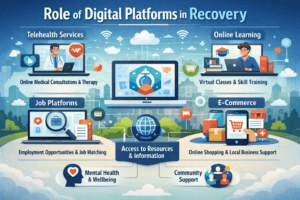
The government has introduced several digital tools to make benefit tracking easier:
- UMANG App
- PFMS (Public Financial Management System)
- DBT Bharat Portal
These platforms allow users to:
- Track payments
- Check eligibility
- File complaints
Digitalization has significantly improved transparency and accessibility.
Real-Life Example
Consider a farmer who stopped receiving PM-KISAN payments. Upon investigation, he found that his Aadhaar was not linked to his bank account due to a mismatch in his name. After correcting the Aadhaar details and linking it properly, his payments resumed, including pending installments.
This example shows how small errors can disrupt benefits—and how they can be fixed.
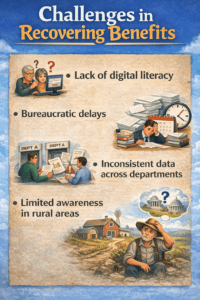
Challenges in Recovering Benefits
Despite improvements, some challenges remain:
- Lack of digital literacy
- Bureaucratic delays
- Inconsistent data across departments
- Limited awareness in rural areas
Addressing these challenges requires both government effort and citizen awareness.
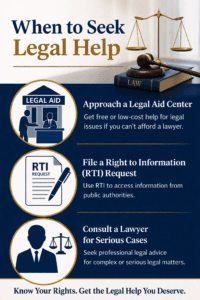
When to Seek Legal Help
If your issue remains unresolved even after multiple complaints:
- Approach a legal aid center
- File a Right to Information (RTI) request
- Consult a lawyer for serious cases
Legal intervention is usually the last resort but can be effective in prolonged disputes.
Conclusion
Losing access to government scheme benefits can be frustrating, but in most cases, it is not permanent. By understanding the reasons behind the issue and following a systematic approach—checking eligibility, updating documents, and filing grievances—you can recover your rightful benefits.
The key lies in awareness, persistence, and proper documentation. Government systems are becoming more transparent and accessible, making it easier than ever to track and reclaim benefits. If you stay informed and proactive, you can ensure that you receive the support you deserve.