How to Check If You Are Eligible for Multiple Government Schemes at Once
Government schemes in India are designed to support citizens across different sections of society—whether it’s financial aid, healthcare, education, housing, or employment. However, many people are unaware that they may be eligible for multiple schemes at the same time. Understanding how to check your eligibility efficiently can help you maximize the benefits available to you and your family.
In this guide, we’ll walk through everything you need to know—from eligibility criteria to practical methods for checking multiple schemes at once.
Want to know about Top Free Benefits Provided by the government in India
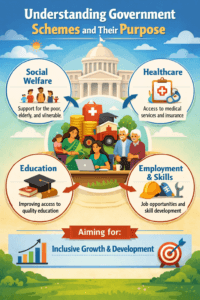
Understanding Government Schemes and Their Purpose
Government schemes are welfare programs introduced by central and state governments to improve the quality of life of citizens. These schemes target different groups, such as
- Low-income families
- Farmers
- Women
- Students
- Senior citizens
- Small business owners
Each scheme has specific objectives. For example, schemes like PM Awas Yojana focus on housing, while Ayushman Bharat provides healthcare coverage. Similarly, PM Kisan Samman Nidhi offers income support to farmers.
What many people don’t realize is that eligibility for one scheme often overlaps with others. For instance, a farmer from a low-income household may qualify for financial aid, insurance, and subsidy-based schemes simultaneously.
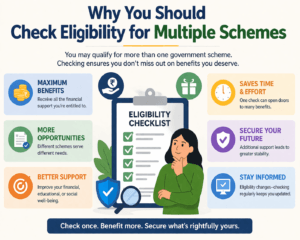
Why You Should Check Eligibility for Multiple Schemes
Checking eligibility for multiple schemes is important for several reasons:
1. Maximizing Benefits
You might be missing out on financial assistance, subsidies, or free services simply because you haven’t checked all available options.
2. Better Financial Stability
Combining benefits from different schemes can significantly reduce your financial burden.
3. Improved Quality of Life
Access to healthcare, education, and housing schemes can enhance your standard of living.
4. Avoiding Duplication Issues
Some schemes restrict overlapping benefits. Knowing your eligibility helps you apply correctly.
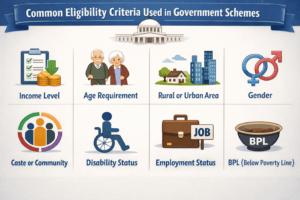
Common Eligibility Criteria Used in Government Schemes
While each scheme has its own rules, most rely on a few common criteria:
1. Income Level
Many schemes are targeted at economically weaker sections (EWS), below-poverty-line (BPL), or low-income groups.
2. Age
Certain schemes are designed for specific age groups such as students, youth, or senior citizens.
3. Gender
Some programs are specifically for women, such as financial assistance or entrepreneurship schemes.
4. Occupation
Farmers, laborers, self-employed individuals, and government employees may have different schemes.
5. Location
Eligibility may depend on whether you live in a rural or urban area or in a particular state.
6. Social Category
Scheduled Castes (SC), Scheduled Tribes (ST), and Other Backward Classes (OBC) often have dedicated schemes.
Documents You Need to Check Eligibility
Before you start checking eligibility, keep these documents ready:
- Aadhaar Card
- PAN Card
- Income Certificate
- Caste Certificate (if applicable)
- Residence Proof
- Bank Account Details
- Ration Card
Having these documents handy will make the process smoother and faster.
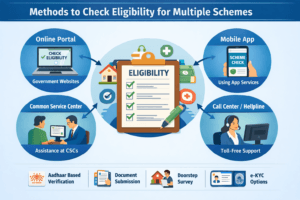
Methods to Check Eligibility for Multiple Schemes
1. Use Government Portals
The easiest way to check eligibility for multiple schemes is through official government portals. Some popular ones include:
- National Government Services Portal (India.gov.in)
- MyScheme Portal (myscheme.gov.in)
- State Government Websites
These platforms allow you to filter schemes based on your profile.
How to Use:
- Visit the portal
- Enter your details (age, income, category, etc.)
- Browse the list of schemes you qualify for
2. Use the MyScheme Eligibility Checker
The MyScheme portal is one of the best tools available today.
Steps:
- Go to MyScheme website
- Click on “Find Schemes for You.”
- Answer a few questions
- Get a personalized list of schemes
This tool is especially useful because it shows multiple schemes at once based on your profile.
3. Visit Common Service Centers (CSCs)
If you are not comfortable using online platforms, you can visit your nearest CSC.
What CSCs Do:
- Help you check eligibility
- Assist in application
- Provide information about schemes
This is particularly helpful in rural areas.
4. Check with Local Government Offices
Local authorities such as
- Panchayat offices
- Municipal offices
- District welfare offices
can guide you on available schemes and your eligibility.
5. Use Mobile Apps
Some government apps also help you track eligibility:
- UMANG App
- State-specific apps
These apps provide easy access to multiple services in one place.
6. Consult Banks and Post Offices
Banks often play a key role in implementing schemes like the following:
- Jan Dhan Yojana
- Pension schemes
- Insurance schemes
Bank officials can help you understand which schemes you qualify for.
Tips to Check Eligibility More Efficiently
1. Keep Your Aadhaar Linked
Most schemes require Aadhaar linkage. Ensure your Aadhaar is linked to your bank account and mobile number.
2. Maintain Updated Documents
Outdated income or residence certificates can lead to rejection.
3. Check Both Central and State Schemes
Don’t limit yourself to central schemes. State governments also offer valuable benefits.
4. Track Deadlines
Some schemes have limited application periods.
5. Avoid Middlemen
Always use official platforms to avoid fraud.
Can You Apply for Multiple Schemes at Once?
Yes, in many cases, you can apply for multiple schemes simultaneously. However:
- Some schemes may have restrictions
- Duplicate benefits may not be allowed
- Eligibility criteria must be met individually
Always read the guidelines carefully before applying.
Common Mistakes to Avoid
- Not checking updated eligibility criteria
- Providing incorrect information
- Ignoring state-level schemes
- Missing deadlines
- Not linking bank account
Avoiding these mistakes can increase your chances of approval.
Real-Life Example
Let’s consider a simple example:
Ravi is a small farmer from a rural area. Based on his profile, he may be eligible for:
- PM Kisan Samman Nidhi
- Crop Insurance Scheme
- Ayushman Bharat
- Subsidized LPG under Ujjwala Yojana
By checking eligibility through a single portal, Ravi can benefit from multiple schemes that improve his income, health, and living conditions.
Future of Government Scheme Access
The government is increasingly focusing on digital platforms to simplify access. In the future, we can expect:
- Single-window eligibility systems
- Automatic scheme recommendations
- Faster approvals
- Improved transparency
This will make it even easier for citizens to access multiple benefits.
Conclusion
Checking your eligibility for multiple government schemes is not as complicated as it may seem. With the help of digital platforms, local centers, and proper documentation, you can easily find and apply for schemes that suit your needs.
Instead of applying randomly, take a structured approach:
- Understand your profile
- Use reliable tools
- Verify your documents
- Apply carefully
By doing so, you can unlock a wide range of benefits designed to support your financial stability and overall well-being.
1 thought on “How to Check If You Are Eligible for Multiple Government Schemes at Once”