How Students Can Study for Free Using Government Support
Education is often called the foundation of a strong and progressive society. Yet, for millions of students, especially in developing countries like India, the cost of education remains a major barrier. Tuition fees, books, accommodation, transportation, and other expenses can make higher education seem out of reach. To address this challenge, governments across the world—and particularly in India—have introduced a wide range of schemes, scholarships, and support systems to ensure that no deserving student is denied education due to financial constraints.
Understanding how to access and utilize these government supports can significantly reduce or even eliminate the cost of studying. This article explores in detail how students can study for free using government assistance, the types of support available, and how to apply for them.
Yet don’t know about How to Get Free Coaching for competitive exams.
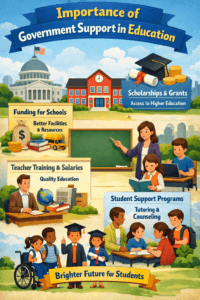
1. Importance of Government Support in Education
Government support plays a crucial role in making education inclusive and accessible. It bridges the gap between affordability and aspiration. Without such initiatives, many talented students would be forced to abandon their dreams due to lack of financial resources.
Government schemes aim to:
- Promote equal opportunities in education
- Reduce dropout rates
- Encourage higher education among economically weaker sections
- Empower marginalized communities
- Build a skilled and educated workforce
In India, education is considered a fundamental right for children between the ages of 6 and 14 under the Right to Education (RTE) Act. However, government support goes beyond school education and extends to college, university, and even international studies.
2. Types of Government Support for Free Education
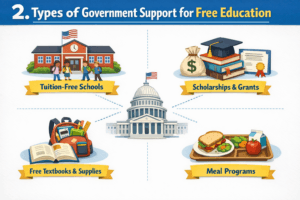
Government assistance comes in various forms. Students need to understand the different types so they can choose the ones that best suit their needs.
a) Scholarships
Scholarships are one of the most common ways students can study for free. These are financial awards that do not need to be repaid.
Types of scholarships include:
- Merit-based scholarships (based on academic performance)
- Need-based scholarships (for economically weaker students)
- Category-based scholarships (for SC/ST/OBC/Minorities)
- Gender-based scholarships (for female students)
Examples in India:
- National Scholarship Portal (NSP) schemes
- Post Matric Scholarship for SC/ST students
- Central Sector Scheme of Scholarships
- Pragati Scholarship for girls
b) Free Education Schemes
Some government initiatives directly provide free education, especially in government schools and certain colleges.
Key programs:
- Right to Education (RTE): Free education up to Class 8
- State Government Free Education Schemes
- Free tuition in government colleges for eligible students
c) Fee Reimbursement Programs
In many states, the government reimburses tuition fees for students from low-income families.
Examples:
- Telangana and Andhra Pradesh Fee Reimbursement Schemes
- Karnataka Vidyasiri Scheme
These programs ensure that students can pursue higher education without worrying about tuition fees.
d) Educational Loans with Subsidy
While loans need to be repaid, government-supported education loans often come with interest subsidies.
Key schemes:
- Central Sector Interest Subsidy Scheme (CSIS)
- Loans under the Pradhan Mantri Vidya Lakshmi Portal
During the study period, the government may pay the interest, reducing the financial burden.
e) Free Books, Uniforms, and Hostels
For school and college students, the government also provides:
- Free textbooks
- Uniforms
- Mid-day meals
- Hostel facilities
These reduce the indirect cost of education significantly.
f) Digital Learning and Online Education
The government has made education more accessible through digital platforms.
Popular platforms:
- SWAYAM (free online courses)
- DIKSHA (school education content)
- e-Pathshala (free textbooks)
- NPTEL (engineering and technical courses)
Students can learn from top institutions like IITs and IIMs without paying fees.
3. Major Government Scholarship Portals
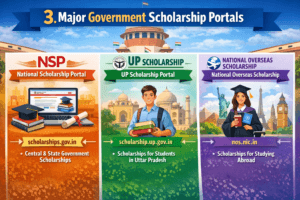
To simplify access, the government has created centralized platforms where students can apply for multiple schemes.
National Scholarship Portal (NSP)
The NSP is a one-stop platform for various central and state government scholarships. Students can:
- Register online
- Apply for multiple scholarships
- Track application status
State Scholarship Portals
Many states have their own portals, such as:
- ePASS (Andhra Pradesh and Telangana)
- MahaDBT (Maharashtra)
- Karnataka Scholarship Portal
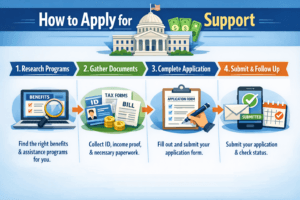
4. How to Apply for Government Support
Many students miss out on benefits simply because they are unaware of the application process. Here is a step-by-step guide:
Step 1: Identify Eligibility
Check:
- Income criteria
- Academic qualifications
- Category (if applicable)
Step 2: Gather Required Documents
Common documents include:
- Aadhaar card
- Income certificate
- Caste certificate (if applicable)
- Previous academic records
- Bank account details
Step 3: Register on Official Portals
Use trusted platforms like NSP or state portals.
Step 4: Fill the Application Form
Ensure all details are accurate. Mistakes can lead to rejection.
Step 5: Submit and Track
After submission, regularly check the status and respond to any queries.
5. Tips to Maximize Benefits
To fully utilize government support, students should:
- Apply early before deadlines
- Apply for multiple scholarships
- Maintain good academic performance
- Keep documents updated
- Regularly check official announcements
Consistency and awareness are key to accessing these benefits.

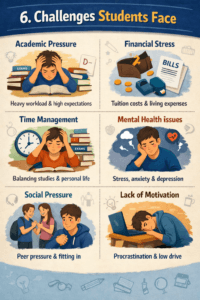
6. Challenges Students Face
Despite the availability of schemes, students often face challenges such as
- Lack of awareness
- Complex application processes
- Delayed disbursement of funds
- Technical issues on portals
To overcome these, schools, colleges, and local authorities must spread awareness and provide guidance.
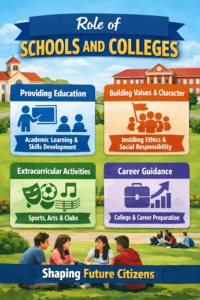
7. Role of Schools and Colleges
Educational institutions play a vital role in helping students access government support.
They can:
- Inform students about available schemes
- Help in application processes
- Verify documents
- Provide counseling and guidance
8. Success Stories
Many students from low-income backgrounds have successfully completed their education through government support. These stories highlight the impact of such initiatives.
For example:
- Students from rural areas becoming engineers through scholarships
- Girls pursuing higher education with the help of government schemes
- First-generation learners completing degrees without financial burden
These examples prove that financial limitations can be overcome with the right support.

9. Future of Free Education
The future of education is becoming more inclusive due to technology and policy reforms. Governments are increasingly investing in:
- Digital education platforms
- Skill development programs
- International scholarships
- AI-based learning tools
These initiatives will further reduce the cost of education and make learning accessible to all.

Conclusion
Education should never be a privilege limited to those who can afford it. Government support systems are designed to ensure that every student, regardless of financial background, has the opportunity to learn and grow. From scholarships and fee reimbursements to free digital courses and hostel facilities, there are numerous ways students can study for free.
However, awareness and proactive effort are essential. Students must actively seek out opportunities, apply on time, and make the most of the resources available. With the right approach, financial constraints need not stand in the way of education.
By utilizing government support effectively, students can not only achieve their academic goals but also contribute to building a stronger and more equitable society.