Central vs State Government Schemes: Full Comparison Guide
Government schemes play a crucial role in improving the lives of citizens by providing financial support, social security, and development opportunities. In India, these schemes are broadly divided into two categories—Central Government Schemes and State Government Schemes. While both aim to uplift society, they differ in their scope, implementation, funding, and target beneficiaries.
Understanding the difference between these schemes is essential, especially for individuals looking to benefit from welfare programs, students applying for scholarships, farmers seeking subsidies, or entrepreneurs exploring financial support.
This comprehensive guide will help you clearly understand Central vs. State Government Schemes, their features, differences, advantages, and how to choose the right one for your needs.
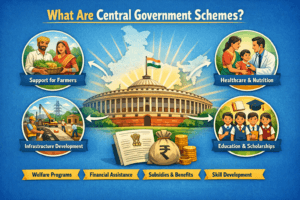
What Are Central Government Schemes?
Central Government Schemes are programs launched and funded by the Government of India. These schemes are designed to benefit citizens across the entire country, regardless of the state they belong to.
They are usually implemented through various ministries such as:
- Ministry of Rural Development
- Ministry of Health and Family Welfare
- Ministry of Education
- Ministry of Agriculture
Key Features of Central Schemes
- Nationwide Coverage: Applicable across all states and union territories
- Uniform Guidelines: Same rules and benefits for all beneficiaries
- Funded by Central Government: Fully or partially funded
- Large-Scale Impact: Designed to address national-level issues
Examples of Central Government Schemes
- Pradhan Mantri Jan Dhan Yojana (PMJDY) – Financial inclusion
- Pradhan Mantri Awas Yojana (PMAY) – Affordable housing
- Ayushman Bharat Yojana – Health insurance coverage
- PM Kisan Samman Nidhi—Financial aid for farmers
- Skill India Mission—Skill development programs
What Are State Government Schemes?
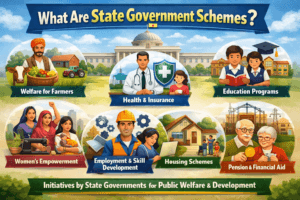
State government schemes are launched by individual state governments to address specific needs of their residents. These schemes focus on local issues such as regional development, employment, agriculture, and welfare.
Each state in India designs its own schemes based on its priorities, resources, and population needs.
Key Features of State Schemes
- Limited to State Residents
- Customized Benefits: Designed based on local requirements
- Funded by State Government
- Flexible Implementation: Can vary across districts
Examples of State Government Schemes
- Rythu Bandhu (Telangana) – Farmer investment support
- Kanyashree Prakalpa (West Bengal) – Girl child education
- Amma Vodi (Andhra Pradesh) – Financial aid for mothers for education
- Mukhyamantri Yuva Swarozgar Yojana (UP) – Employment support
- Ladli Lakshmi Yojana (MP) – Girl child welfare
Central vs State Government Schemes: Key Differences
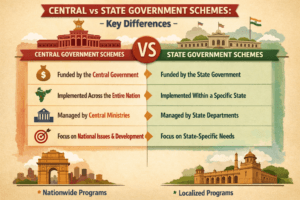
Understanding the core differences will help you identify which scheme is more relevant to you.
1. Coverage Area
- Central Schemes: Cover the entire country
- State Schemes: Limited to a particular state
Central schemes aim for national development, while state schemes focus on regional progress.
2. Funding Structure
- Central Schemes: Funded by the central government (sometimes with state contribution)
- State Schemes: Fully funded by the respective state government
Some central schemes follow a cost-sharing model, where both central and state governments contribute.
3. Implementation
- Central Schemes: Implemented through state governments or central agencies
- State Schemes: Directly implemented by state departments
Even though central schemes are national, their execution often happens at the state level.
4. Eligibility Criteria
- Central Schemes: Standard eligibility criteria across India
- State Schemes: Criteria vary from state to state
For example, income limits, caste categories, or residency requirements may differ.
5. Flexibility
- Central Schemes: Less flexible, follow strict national guidelines
- State Schemes: More flexible and adaptable
State governments can modify schemes quickly based on local needs.
6. Target Audience
- Central Schemes: Broad categories like farmers, students, women, senior citizens
- State Schemes: More specific groups depending on local demographics
7. Awareness and Accessibility
- Central Schemes: More widely advertised and promoted
- State Schemes: Awareness may vary depending on state outreach
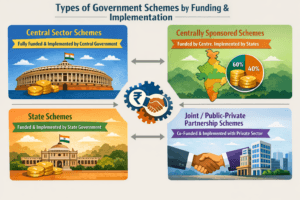
Types of Central Schemes
Central government schemes can be categorized into three types:
1. Central Sector Schemes
- Fully funded by the central government
- Example: PM Kisan
2. Centrally Sponsored Schemes (CSS)
- Funded jointly by central and state governments
- Example: MGNREGA, PMAY
3. Core of the Core Schemes
- Focus on critical sectors like rural development and poverty alleviation
Why Both Schemes Are Important
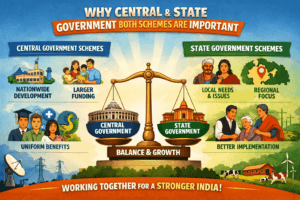
Both central and state schemes are equally important for balanced development.
Importance of Central Schemes
- Ensure uniform development across India
- Address national challenges like poverty, health, and education
- Provide large-scale funding
Importance of State Schemes
- Solve region-specific problems
- Provide targeted benefits
- Faster implementation and adaptation
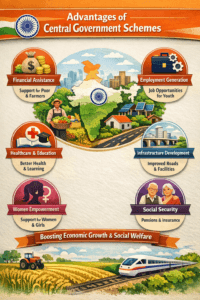
Advantages of Central Government Schemes
- Wider reach and impact
- Strong funding support
- Standardized benefits
- Better monitoring systems
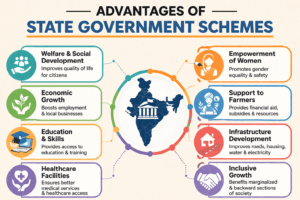
Advantages of State Government Schemes
- Tailored to local needs
- Faster decision-making
- More accessible at local level
- Innovative solutions for regional issues
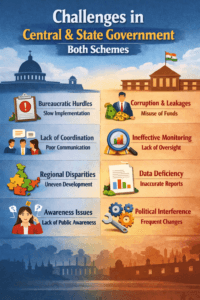
Challenges in Both Schemes
Central Schemes Challenges
- Implementation delays
- Lack of local customization
- Coordination issues with states
State Schemes Challenges
- Limited budget
- Unequal development across states
- Lack of awareness
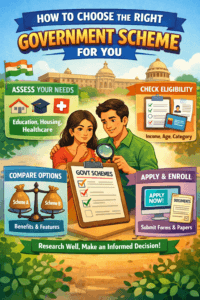
How to Choose the Right Scheme for You
Choosing the right scheme depends on your situation and eligibility.
Step-by-Step Guide
- Identify Your Need
(Education, health, housing, employment, etc.) - Check Eligibility Criteria
Compare both central and state schemes - Visit Official Portals
- Central: https://www.india.gov.in
- State portals (varies by state)
- Avoid Duplication
Some schemes may overlap - Apply Through Official Channels Only
Avoid middlemen or unauthorized agents
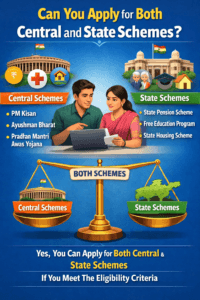
Can You Apply for Both Central and State Schemes?
Yes, in many cases, you can apply for both types of schemes if:
- You meet the eligibility criteria
- The schemes do not overlap in benefits
- There are no restrictions
However, some schemes may restrict dual benefits, so always check guidelines carefully.
Real-Life Example
A farmer in Telangana can benefit from:
- Central Scheme: PM Kisan (₹6,000 per year)
- State Scheme: Rythu Bandhu (investment support)
This combination provides better financial support than relying on one scheme alone.
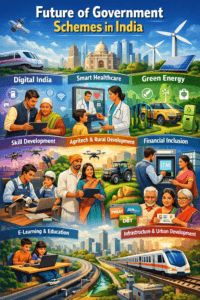
Future of Government Schemes in India
With digital transformation, government schemes are becoming
- More transparent
- Easier to access online
- Faster in processing
- Linked with Aadhaar and bank accounts
Initiatives like Digital India and Direct Benefit Transfer (DBT) are improving efficiency and reducing corruption.
Conclusion
Central and state government schemes together form the backbone of India’s welfare system. While central schemes provide a uniform framework for nationwide development, state schemes bring flexibility and local relevance.
To make the most of these opportunities, individuals must stay informed, understand eligibility criteria, and apply through the correct channels. By leveraging both types of schemes effectively, citizens can significantly improve their financial stability and quality of life.
1 thought on “Central vs State Government Schemes: Full Comparison Guide”