
Government Subsidies Available for Farmers in 2025 (Complete Guide)
Agriculture remains the backbone of India’s economy, supporting more than half of the country’s population either directly or indirectly. To strengthen farmers’ incomes, improve productivity, and reduce financial risks, the Government of India continues to offer multiple subsidies and welfare schemes. In 2025, several central and state government subsidies are actively supporting farmers in areas such as income support, crop insurance, irrigation, seeds, fertilizers, machinery, livestock, and digital agriculture.
This detailed guide explains all major government subsidies available for farmers in 2025, eligibility criteria, benefits, and how farmers can apply.
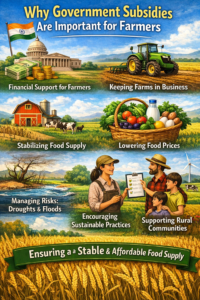
Why Government Subsidies Are Important for Farmers
Farming is highly dependent on factors like rainfall, soil quality, market prices, and climate conditions. Government subsidies help farmers by:
-
Reducing the cost of cultivation
-
Ensuring income stability
-
Encouraging modern farming techniques
-
Protecting farmers from crop losses
-
Supporting small and marginal farmers
-
Promoting sustainable and organic agriculture
In 2025, the government’s focus is not only on financial aid but also on technology adoption, sustainability, and farmer empowerment.
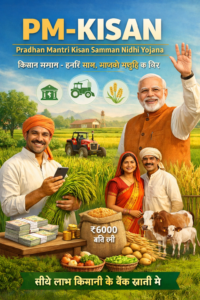
1. PM Kisan Samman Nidhi Yojana (PM-KISAN)
Overview
PM-KISAN is one of the most important income support schemes for farmers.
Benefits
-
₹6,000 per year
-
Paid in three equal installments of ₹2,000
-
Directly credited to farmers’ bank accounts
Eligibility
-
Small and marginal farmers
-
Must own cultivable land
-
Aadhaar and bank account mandatory
Why It Matters in 2025
With rising input costs, PM-KISAN provides timely financial support to help farmers manage expenses such as seeds, fertilizers, and daily farming needs.
Want to know about PM Kisan Samman Nidhi: Latest Updates and Payment Status Check (Easy Guide)
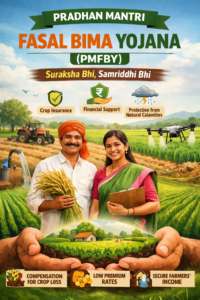
2. Pradhan Mantri Fasal Bima Yojana (PMFBY)
Overview
PMFBY is India’s flagship crop insurance scheme that protects farmers from crop losses due to natural calamities.
Coverage Includes
-
Drought
-
Flood
-
Cyclone
-
Pest attacks
-
Disease outbreaks
Premium Rates
-
Kharif crops: 2%
-
Rabi crops: 1.5%
-
Commercial crops: 5%
Key Benefit
Farmers receive compensation even in case of partial crop damage.
Importance in 2025
Climate change has increased weather uncertainty. PMFBY continues to be a crucial safety net for farmers.
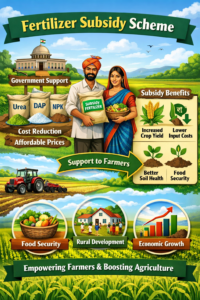
3. Fertilizer Subsidy Scheme
Overview
The Government of India provides subsidies on urea, DAP, NPK, and other fertilizers to keep prices affordable.
Benefits
-
Farmers buy fertilizers at reduced prices
-
Ensures balanced nutrient use
-
Supports soil fertility
How It Works
Subsidy is given directly to fertilizer companies, reducing the retail price for farmers.
2025 Focus
Encouragement of nano urea and organic fertilizers to reduce chemical dependency.
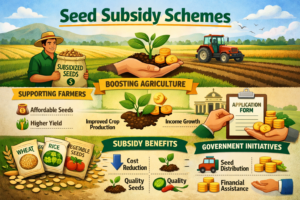
4. Seed Subsidy Schemes
Overview
High-quality seeds improve crop yield significantly. Seed subsidies help farmers access certified seeds at lower costs.
Crops Covered
-
Rice
-
Wheat
-
Pulses
-
Oilseeds
-
Millets
Benefits
-
25%–50% subsidy on certified seeds
-
Higher productivity
-
Better resistance to pests and diseases
Implementation
Provided through state agriculture departments and Krishi Vigyan Kendras (KVKs).
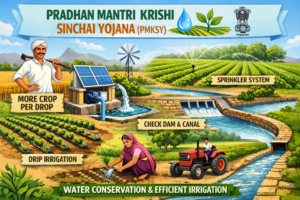
5. Pradhan Mantri Krishi Sinchai Yojana (PMKSY)
Objective
“Per Drop More Crop” – efficient water use in agriculture.
Key Components
-
Drip irrigation
-
Sprinkler irrigation
-
Water harvesting
-
Micro-irrigation systems
Subsidy Amount
-
Up to 55% for small and marginal farmers
-
Up to 45% for other farmers
Importance in 2025
With water scarcity becoming severe, PMKSY promotes sustainable irrigation methods.
6. Kisan Credit Card (KCC) Scheme
Overview
KCC provides affordable credit to farmers for cultivation and allied activities.
Benefits
-
Low-interest loans
-
Interest subvention up to 3%
-
Flexible repayment options
Loan Coverage
-
Crop production
-
Animal husbandry
-
Fisheries
-
Farm equipment
2025 Updates
Digital KCC services and faster loan approvals through online platforms.

7. Agricultural Machinery Subsidy
Purpose
To reduce labor dependency and improve farming efficiency.
Machinery Covered
-
Tractors
-
Power tillers
-
Seed drills
-
Harvesters
-
Sprayers
Subsidy Rate
-
40%–50% for individual farmers
-
Up to 80% for farmer groups and cooperatives
Benefit
Mechanization reduces time, effort, and production costs.

8. National Livestock Mission (NLM)
Overview
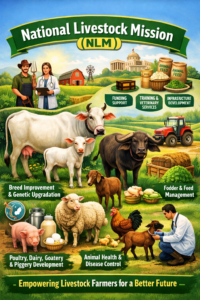
NLM supports farmers engaged in animal husbandry and dairy farming.
Subsidies Available For
-
Dairy units
-
Goat farming
-
Sheep rearing
-
Poultry farming
Benefits
-
Capital subsidy
-
Skill training
-
Improved breed support
Importance
Livestock farming provides additional income and employment opportunities.
9. PM Matsya Sampada Yojana (PMMSY)
Overview
PMMSY focuses on strengthening the fisheries sector.
Benefits
-
Subsidies for fish ponds
-
Cold storage support
-
Fish seed hatcheries
-
Marketing infrastructure
Target Groups
-
Fish farmers
-
Fishermen
-
Fish farmer producer organizations
2025 Goal
Increase fish production and farmers’ income through modern aquaculture practices.

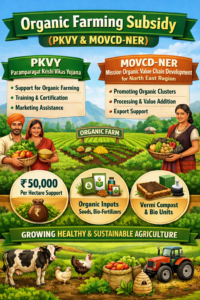
10. Organic Farming Subsidy (PKVY & MOVCD-NER)
Overview
To promote chemical-free farming practices.
Benefits
-
Financial assistance for organic inputs
-
Certification support
-
Market linkage
Key Schemes
-
Paramparagat Krishi Vikas Yojana (PKVY)
-
Mission Organic Value Chain Development
Relevance in 2025
Rising demand for organic food has made organic farming more profitable.
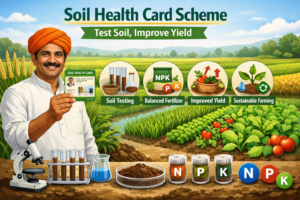
11. Soil Health Card Scheme
Purpose
Improve soil quality and crop productivity.
Benefits
-
Free soil testing
-
Personalized nutrient recommendations
-
Reduced fertilizer misuse
Impact
Helps farmers make informed decisions and reduce input costs.
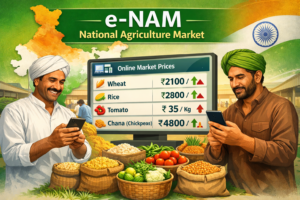
12. e-NAM (National Agriculture Market)
Overview
A digital trading platform for agricultural produce.
Benefits
-
Better price discovery
-
Reduced middlemen
-
Transparent bidding system
2025 Advantage
Integration with mobile apps and regional markets.
How to Apply for Government Subsidies
Farmers can apply through:
-
Official portals (PM-KISAN, PMFBY, state agriculture websites)
-
Common Service Centres (CSC)
-
Agriculture Department offices
-
Krishi Vigyan Kendras
Required Documents
-
Aadhaar card
-
Land records
-
Bank account details
-
Mobile number
Challenges Farmers Still Face
Despite many schemes, challenges include:
-
Lack of awareness
-
Digital literacy issues
-
Delays in payments
-
Complex documentation
The government is addressing these through digital platforms, helplines, and awareness programs.
Conclusion
In 2025, government subsidies play a vital role in supporting Indian farmers. From direct income support and insurance coverage to irrigation, machinery, livestock, and organic farming, these schemes aim to make agriculture sustainable, profitable, and resilient.
Farmers are encouraged to stay updated, complete e-KYC processes, and actively use digital platforms to benefit fully from these subsidies. With proper awareness and timely application, government schemes can significantly improve farmers’ livelihoods and ensure food security for the nation.