Latest Government Policies Affecting UPSC Aspirants (2025)
Preparing for the Civil Services Examination (CSE) conducted by the Union Public Service Commission (UPSC) is not just about studying history, polity, economy, or current affairs. Government policies, administrative reforms, education-related initiatives, and digital governance decisions directly and indirectly shape how aspirants prepare, access resources, and approach the examination.
In recent years, the Government of India has introduced several policy changes that significantly impact UPSC aspirants. These policies influence exam preparation methods, coaching culture, digital learning access, inclusivity, language options, financial support, and career expectations after selection.
This article provides a comprehensive, updated analysis of the latest government policies affecting UPSC aspirants, written in a human, analytical tone useful for GS answers, essays, interviews, and current affairs notes.
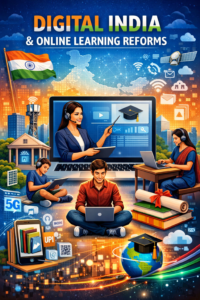
1. Digital India and Online Learning Reforms
Policy Overview
Under the Digital India Mission, the government has expanded digital infrastructure and online education platforms to democratize learning across India.
Key Initiatives Impacting UPSC Aspirants
SWAYAM Platform
DIKSHA
National Digital Library of India (NDLI)
e-PG Pathshala
PM eVIDYA
Impact on UPSC Preparation
Earlier, UPSC preparation was largely concentrated in metro cities like Delhi, Hyderabad, and Bengaluru. Digital policies have reduced this dependency.
Positive Impacts:
Free access to high-quality lectures from IITs, central universities, and reputed faculty
Increased reach for rural and economically weaker aspirants
Reduced financial burden of expensive coaching institutes
Availability of recorded lectures for flexible learning
Challenges:
The digital divide still exists in remote areas
Lack of structured mentorship in free platforms
Overabundance of content causing confusion
UPSC Relevance
GS Paper II (Governance)
GS Paper IV (Ethics—accessibility & equity)
Essay topics on education reforms
2. National Education Policy (NEP) 2020 and Its Long-Term Impact
Policy Overview
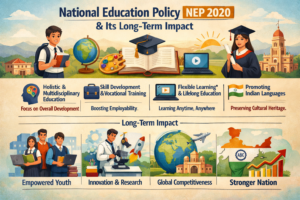
The National Education Policy 2020 aims to transform India’s education system by promoting multidisciplinary learning, conceptual understanding, and critical thinking.
Key Features Relevant to UPSC Aspirants
Focus on analytical skills instead of rote learning
Emphasis on Indian knowledge systems
Promotion of mother tongue and regional languages
Flexibility in subject choices
Impact on Future Aspirants
Though NEP does not directly change the UPSC syllabus, it shapes the academic foundation of future candidates.
Key Changes:
Students trained under NEP are likely to have better conceptual clarity
Improved interdisciplinary thinking helps in GS and Essay papers
Exposure to ethics, values, and Indian culture aligns with UPSC expectations
Long-Term Significance
UPSC itself has gradually moved towards:
Application-based questions
Opinion-oriented answers
Ethical and governance-centric approach
NEP supports this shift.
Want to know about National Education Policy (NEP) Explained in simple words?
3. Language Policy and Regional Language Promotion
Policy Overview
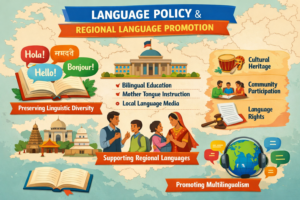
The government has actively promoted Indian languages through policy measures and administrative reforms.
Impact on UPSC Aspirants
UPSC allows answers in 22 scheduled languages
Increased availability of study materials in Hindi and regional languages
Growth of regional language coaching platforms
Benefits
Inclusivity for non-English medium candidates
Reduced psychological barrier for rural aspirants
Encouragement of linguistic diversity
Challenges
Limited availability of high-quality test series in regional languages
Difficulty in translating technical terms accurately
Interview stage still perceived as English-dominated
UPSC Perspective
Language policy supports the constitutional value of equality of opportunity and cultural diversity.
4. Coaching Regulation and Consumer Protection Measures
Policy Context
Although coaching institutes are not directly regulated by a central law, the government has taken steps under
Consumer Protection Act, 2019
Guidelines against misleading advertisements
State-level coaching regulations
Recent Developments
Crackdown on false success claims
Mandatory disclosure of actual results
Penalties for misleading advertisements
Impact on Aspirants
Positive Outcomes:
Reduced exploitation of students
More transparency in coaching outcomes
Awareness about unrealistic promises
Limitations:
Still no uniform national regulatory framework
Online coaching largely unregulated
Aspirant Strategy
Candidates must:
Avoid result-oriented marketing traps
Focus on self-study supplemented by selective guidance

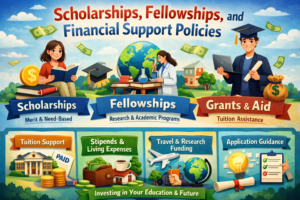
5. Scholarships, Fellowships, and Financial Support Policies
Major Government Schemes
National Fellowship for SC/ST
OBC Scholarship Schemes
Minority Education Schemes
Eklavya Model Residential Schools (indirect impact)
Impact on UPSC Aspirants
Financial support reduces dropouts
Encourages representation from marginalized sections
Enables full-time preparation for economically weaker candidates
Limitations
Lack of awareness about schemes
Delays in scholarship disbursement
Complex application procedures
UPSC Relevance
Social justice
Inclusive governance
GS Paper II & IV
Want to know about Top Government Scholarship Programs for Students in 2025
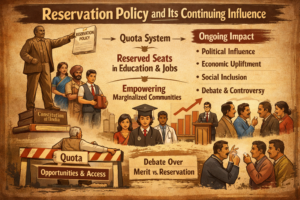
6. Reservation Policy and Its Continuing Influence
Policy Background
India’s reservation system continues under constitutional provisions:
SC, ST, OBC reservations
EWS reservation (10%)
Impact on Aspirants
Increased participation from disadvantaged communities
Broader social representation in civil services
Competitive pressure across all categories
Key Issues
Debate over creamy layer criteria
Demands for sub-categorization
Legal scrutiny of reservation limits
Exam Strategy
Aspirants must understand reservation policy not only for personal eligibility but also as a core policy topic.
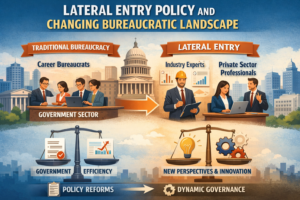
7. Lateral Entry Policy and Changing Bureaucratic Landscape
Policy Overview
The government has introduced lateral entry into senior civil services positions to bring domain experts from the private sector.
Impact on UPSC Aspirants
Psychological Impact:
Concerns about reduced importance of traditional UPSC route
Fear of limited career progression
Reality Check:
Lateral entry numbers are very limited
UPSC-selected officers remain the backbone of administration
UPSC Preparation Angle
Increased importance of specialization
Need for domain knowledge
Relevance of public administration and governance expertise
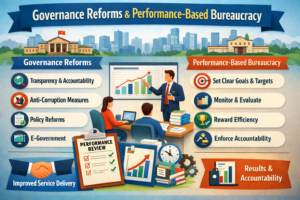
8. Governance Reforms and Performance-Based Bureaucracy
Policy Developments
Mission Karmayogi (National Programme for Civil Services Capacity Building)
Performance appraisal reforms
Continuous learning emphasis
Impact on Aspirants
Shift from seniority-based to performance-based career growth
Need for ethical, efficient, and citizen-centric mindset
Increased importance of soft skills
Interview Relevance
UPSC interview panels increasingly test:
Adaptability
Ethical reasoning
Practical governance understanding
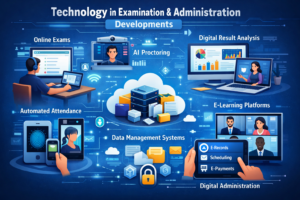
9. Technology in Examination and Administration
Developments
Increased use of online applications
Digitized admit cards and results
Data analytics in governance
Future Possibilities
Online exams (speculative)
AI-assisted evaluation (limited use)
Greater transparency
Aspirant Impact
Faster processes
Reduced paperwork
Need for digital literacy
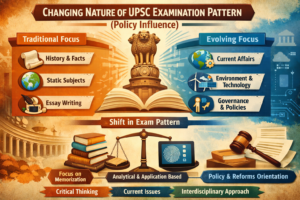
10. Changing Nature of UPSC Examination Pattern (Policy Influence)
Though UPSC is autonomous, broader policy shifts influence exam trends:
Observed Trends
Fewer factual questions
More current affairs + policy-based questions
Focus on governance outcomes
Ethical dilemmas and case studies
Preparation Implications
Reading government reports (Economic Survey, ARC reports)
Understanding policy intent, not just facts
Answer writing with real-world relevance
Conclusion
Government policies play a crucial role in shaping the ecosystem of UPSC preparation. From digital education reforms and language inclusivity to scholarship schemes and bureaucratic restructuring, these policies directly affect how aspirants study, compete, and envision their future roles as civil servants.
For UPSC aspirants, understanding these policies is important not only for personal preparation strategy but also for answer writing, interviews, and an administrative perspective. The modern civil servant is expected to be policy-aware, technologically competent, ethically grounded, and socially inclusive.
Ultimately, success in UPSC today requires not just hard work but also alignment with India’s evolving governance vision.